
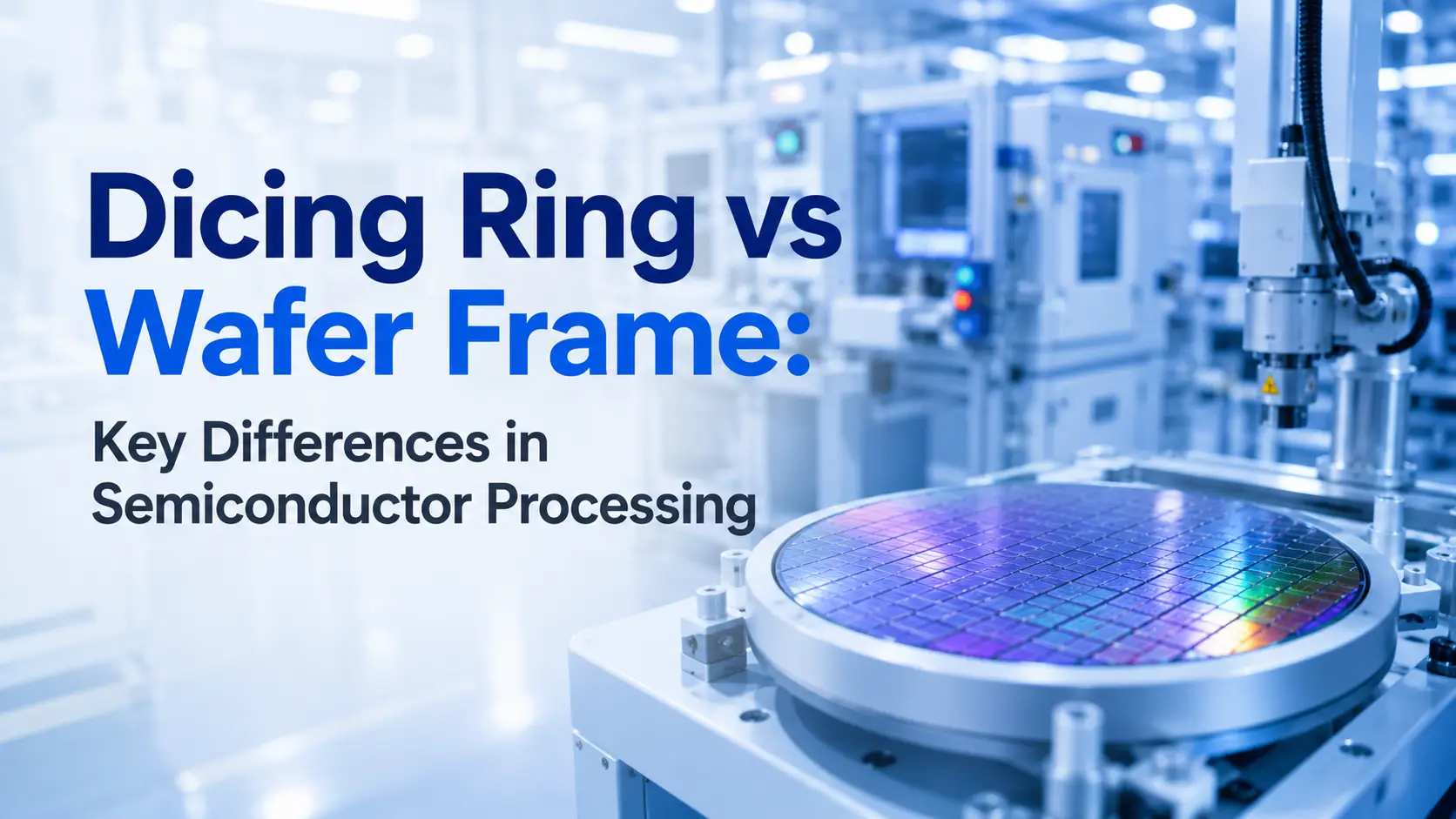
Dicing Ring vs Wafer Frame: Key Differences in Semiconductor Processing
In semiconductor back-end manufacturing, the terms dicing ring and wafer frame are often used together. They can sometimes refer to similar ring-shaped components, but their meaning depends on the process.
A wafer frame is a broader support frame used in wafer handling, grinding, polishing, dicing, cleaning, inspection, storage, and transport.
A dicing ring is more specific. It usually refers to the frame used during wafer dicing, where dicing tape holds the wafer while it is cut into individual dies.
For engineers, buyers, and procurement teams, knowing the difference helps avoid confusion when selecting size, material, flatness, surface finish, cleaning requirements, and custom specifications.
What Is a Dicing Ring?
A dicing ring is a rigid support ring used to hold dicing tape or UV film during wafer dicing. The wafer is attached to the adhesive tape, and the tape is fixed onto the ring. This creates a stable structure for cutting and post-dicing handling.
During wafer dicing, a dicing ring helps:
- Hold the dicing tape securely
- Support the wafer during cutting
- Reduce wafer movement and vibration
- Keep separated dies organized on the tape
- Improve handling after dicing
- Support process repeatability
A dicing ring is especially important in blade dicing and laser dicing, where tape stability, ring flatness, and wafer positioning can affect cutting quality.
If the ring is not flat, rigid, or properly matched with the equipment, the tape may not mount evenly. This can increase the risk of wafer shifting, edge chipping, die misalignment, or yield loss.
For more details about dicing ring structure, tape support, and custom specifications, please read our complete Dicing Ring Guide.
What Is a Wafer Frame?
A wafer frame is a support frame used to hold and transfer wafers during semiconductor back-end processing. It may also be called a wafer ring, metal wafer frame, semiconductor wafer frame, or tape frame, depending on the factory, equipment, or supplier.
Unlike “dicing ring,” which is closely related to wafer dicing, “wafer frame” usually covers a wider range of applications.
A wafer frame may be used during:
- Wafer grinding
- Wafer polishing
- Wafer dicing
- Wafer cleaning
- Visual inspection
- Storage
- Transport
- Die pick-up
- Back-end packaging preparation
In simple terms, wafer frame refers to the general product category, while dicing ring describes how the frame is used in the dicing process.
For broader information about wafer frame structure, materials, and applications, check this Wafer Frame Guide.
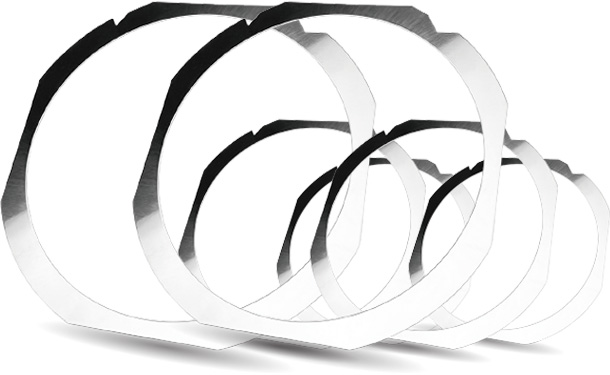
Dicing Ring vs Wafer Frame: Quick Comparison
| Comparison Item | Dicing Ring | Wafer Frame |
|---|---|---|
| Main Meaning | Ring used during wafer dicing | General wafer support frame |
| Main Process | Wafer dicing and die separation | Grinding, polishing, dicing, cleaning, transport |
| Main Function | Holds dicing tape and stabilizes wafer during cutting | Supports wafers across multiple back-end processes |
| Related Terms | Dicing frame, tape frame, metal film frame | Wafer ring, metal wafer frame, semiconductor wafer frame |
| Key Requirement | Tape support, flatness, cutting stability | Handling safety, process compatibility, wafer support |
| Common Materials | Stainless steel, metal, plastic | Stainless steel, metal, plastic |
| Reuse Potential | High for stainless steel rings | High for reusable metal frames |
Main Difference: Application and Process Focus
The easiest way to understand the difference is this:
A dicing ring is used specifically for wafer dicing, while a wafer frame is a broader support component used across multiple semiconductor back-end processes.
A wafer frame may support the wafer during grinding, polishing, dicing, cleaning, inspection, storage, and transport. It is a general term for wafer handling support.
A dicing ring focuses more directly on the wafer dicing process. During dicing, the wafer is mounted on dicing tape, and the dicing ring holds the tape in place while the wafer is cut into individual dies.
Because wafer dicing requires precision, the dicing ring should provide stable dimensions, good flatness, clean edge finishing, and reliable tape support. These factors help reduce wafer movement, improve cutting stability, and support smoother post-dicing handling.
How a Dicing Ring Works with Dicing Tape
A dicing ring works together with dicing tape, UV tape, or adhesive film. The wafer is attached to the tape, and the tape is secured onto the ring.
The structure is simple:
- Dicing ring holds the tape
- Dicing tape holds the wafer
- Wafer is cut into individual dies
During cutting, the ring keeps the tape stable and helps maintain wafer position. After dicing, the separated dies remain attached to the tape in their original layout. This makes it easier to move the wafer to cleaning, inspection, die pick-up, or packaging.
If the ring is not properly made or matched with the process, common issues may include:
- Uneven tape mounting
- Wafer shifting during cutting
- Film deformation
- Edge chipping
- Die misalignment
- Handling damage after dicing
This is why the ring, tape, wafer size, and equipment requirements should be reviewed together.
When Should You Use a Dicing Ring?
A dicing ring is the better choice when the main process is wafer dicing.
It is commonly used for:
- Wafer cutting stability
- Dicing tape support
- Blade dicing
- Laser dicing
- Die separation
- Tape mounting
- Post-dicing transfer
- Dicing ring cleaning
- Dicing ring reuse
- Custom dicing ring dimensions
The term dicing ring is often used when the discussion is focused on wafer dicing, dicing tape support, die separation, and post-dicing handling.
When Should You Use a Wafer Frame?
A wafer frame is more suitable when the requirement is broader than dicing.
It is commonly used for:
- General wafer support
- Wafer handling
- Wafer frame material selection
- Wafer frame size selection
- Wafer frame cleaning
- Wafer frame cassette compatibility
- Wafer storage and transport
- Wafer frame box compatibility
- Semiconductor wafer frame selection
The term wafer frame is more suitable when discussing the overall product category, including wafer support, handling, storage, transport, cleaning, and process compatibility.
Are Dicing Rings and Wafer Frames the Same Product?
Sometimes, yes. A stainless steel wafer frame can also function as a dicing ring when it is used with dicing tape during wafer dicing.
The difference is mainly about application.
A buyer may say wafer frame when discussing wafer handling, cleaning, storage, or transport. Another buyer may say dicing ring when focusing on tape mounting, wafer cutting, die separation, and post-dicing handling.
So the better question is:
Which process does the frame need to support?
If the main process is wafer dicing, dicing ring is the more accurate term. If the requirement includes grinding, polishing, cleaning, inspection, storage, or general transfer, wafer frame may be the better term.
Key Specifications to Compare
Whether you call it a dicing ring or a wafer frame, the specifications must match the wafer size, dicing tape, equipment, cassette, storage system, and production flow.
1. Material
Material affects rigidity, durability, corrosion resistance, cleaning performance, and reuse cycle. Stainless steel is commonly used for reusable dicing rings and wafer frames because it offers stable strength and long service life.
2. Flatness
Flatness is especially important for dicing rings. Poor flatness can cause uneven tape mounting, unstable wafer positioning, and cutting variation.
3. Thickness
Thickness affects rigidity and equipment fit. A ring that is too thin may deform easily. A ring that is too thick may not fit certain dicing tools, cassettes, or storage systems.
4. Outer Diameter and Inner Diameter
The outer diameter and inner diameter must match the wafer size, dicing equipment, tape format, cassette, and process requirements. Incorrect dimensions may cause loading, positioning, or transfer problems.
5. Surface Finish
Surface finish may affect cleaning, handling, appearance, and tape contact. Common options include polished and matte finishes.
6. Edge Quality
Burrs, sharp edges, or rough finishing may damage dicing tape or create handling risk. Clean edge finishing is important for both safety and tape protection.
7. Engraving and Traceability
Laser engraving can mark logos, product numbers, batch codes, serial numbers, and manufacturing dates. This supports inventory control, production tracking, and quality management.
Stainless Steel Dicing Ring vs Stainless Steel Wafer Frame
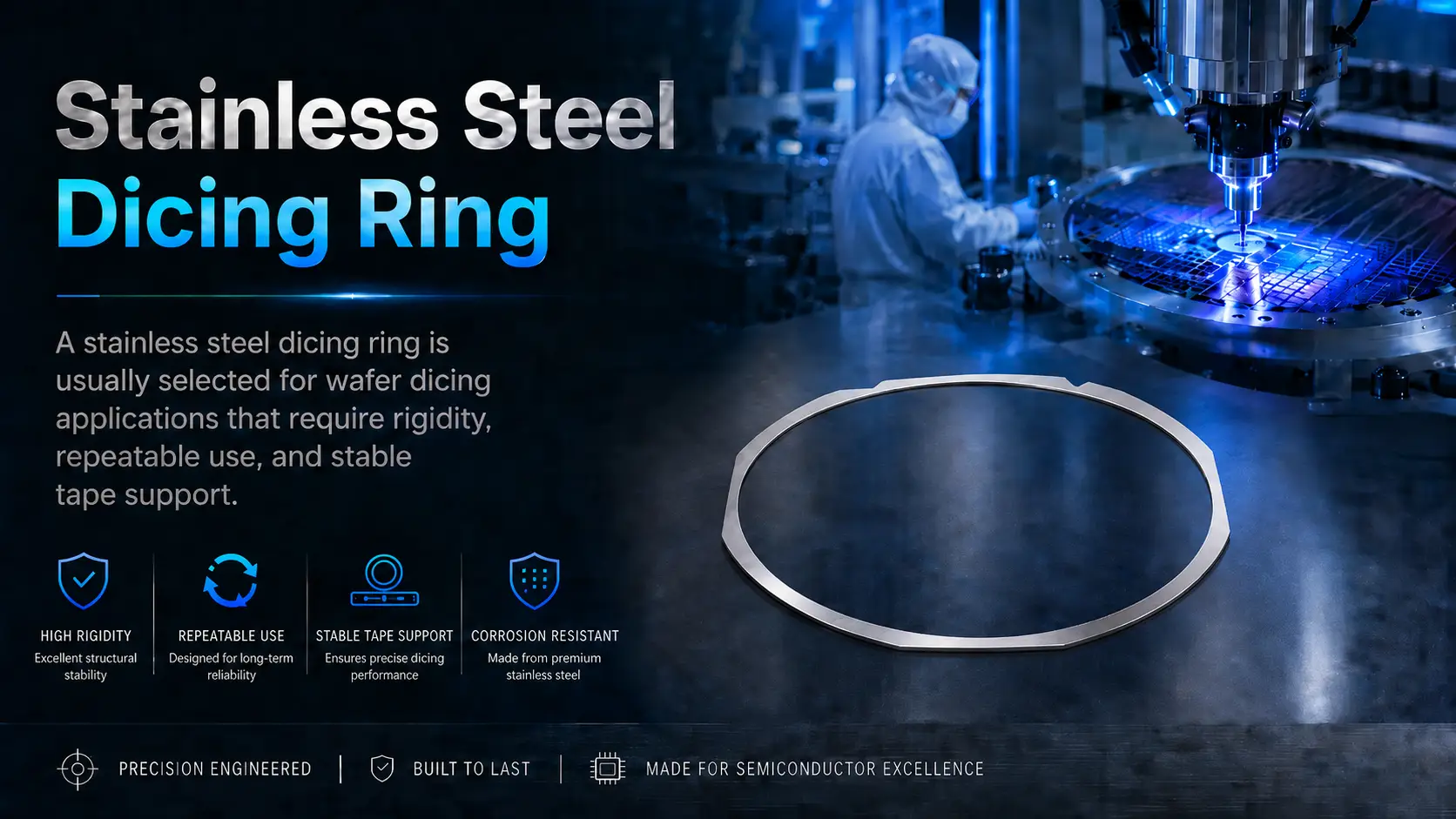
A stainless steel dicing ring is usually selected for wafer dicing applications that require rigidity, repeatable use, and stable tape support.
A stainless steel wafer frame may be used for a wider range of wafer handling processes, including dicing, cleaning, inspection, transport, and storage.
Both can provide useful benefits:
- High rigidity
- Good dimensional stability
- Long service life
- Reusable performance
- Cleaning compatibility
- Lower deformation risk
- Precision machining support
- Laser engraving options
- Professional surface quality
For high-volume production, stainless steel can help reduce replacement frequency and support more consistent wafer handling.
Which One Should You Choose?
The right choice depends on your process.
Choose a dicing ring if your main requirement is:
- Wafer dicing
- Dicing tape support
- Blade dicing or laser dicing
- Die separation
- Cutting stability
- Post-dicing handling
- Dicing ring cleaning and reuse
Choose a wafer frame if your requirement includes:
- General wafer handling
- Grinding
- Polishing
- Cleaning
- Inspection
- Storage
- Transport
- Wafer frame cassette compatibility
- Broader semiconductor back-end processing
In many cases, a custom stainless steel frame can support both wafer frame and dicing ring requirements. The best choice depends on wafer size, equipment fit, tape format, cleaning method, and reuse expectations.
Custom Dicing Ring and Wafer Frame Options
Different semiconductor processes may require different dimensions, materials, finishes, or traceability features. YJ Corevia supports custom dicing ring and wafer frame manufacturing for semiconductor back-end applications.
Custom options may include:
- Standard 6-inch, 8-inch, and 12-inch sizes
- Custom outer diameter, inner diameter, and thickness
- Special ring geometry based on equipment or process requirements
- Stainless steel material options
- Polished or matte surface finish
- Laser engraving for logos, serial numbers, batch codes, or manufacturing dates
- Custom packaging support
- Cleaning and refurbishment service for reusable rings
A custom dicing ring or wafer frame can improve equipment fit, wafer handling stability, traceability, and long-term process efficiency.
Common Problems When the Wrong Frame Is Used
Using the wrong ring or frame may create hidden process risks. These issues may not be obvious at first, but they can affect cutting quality, equipment fit, and long-term cost.
1. Tape Mounting Instability
If the frame is not flat or rigid enough, the dicing tape may not mount evenly. This can affect wafer stability during cutting.
2. Equipment Fit Problems
Incorrect outer diameter, inner diameter, or thickness may cause loading issues with dicing equipment, wafer frame cassettes, or storage systems.
3. Wafer Movement During Dicing
Poor ring stability can allow wafer shifting during dicing, increasing the risk of edge chipping or die misalignment.
4. Shorter Service Life
A low-quality ring may deform, wear, or become difficult to clean after repeated use.
5. Poor Traceability
Without engraving or batch control, it is harder to track ring usage, cleaning cycles, and production lots.
Selecting the correct dicing ring or wafer frame helps reduce these risks and supports more stable production.
How to Choose a Reliable Supplier
When choosing a dicing ring or wafer frame supplier, semiconductor manufacturers should look beyond price. A reliable supplier should understand wafer handling requirements, precision metal fabrication, surface finishing, cleaning needs, and custom production.
1. Semiconductor Manufacturing Experience
The supplier should understand wafer handling, dicing tape support, post-dicing transfer, and the quality requirements of semiconductor back-end processes.
2. Precision Metal Processing Capability
Look for stainless steel processing, CNC machining, dimensional control, flatness inspection, and clean edge finishing.
3. Surface Quality and Finish Control
A reliable supplier should provide consistent polished or matte surface options, with proper inspection to reduce cleaning and handling risks.
4. Custom Size Support
The supplier should support custom outer diameter, inner diameter, thickness, special ring geometry, and standard 6-inch, 8-inch, and 12-inch wafer sizes.
5. Traceability and Engraving Options
Laser engraving for product numbers, logos, serial numbers, batch codes, and manufacturing dates can support production tracking and quality control.
6. Cleaning and Refurbishment Service
Suppliers that offer dicing ring cleaning or refurbishment can help extend ring life and reduce long-term operating costs.
7. Quality Control and Packaging
Inspection records, protective packaging, and stable shipment handling are important for repeat orders and consistent supply.
A good supplier should help reduce handling risk, improve process stability, and support long-term production needs.

YJ Corevia Dicing Ring and Wafer Frame Solutions
YJ Corevia provides precision stainless steel dicing rings and wafer frames for semiconductor back-end manufacturing. With long-term experience in stainless steel fabrication, CNC machining, polishing, laser engraving, cleaning, and custom production, YJ Corevia supports customers who need stable and reusable wafer handling components.
Our solutions are designed for:
- Wafer dicing support
- Dicing tape mounting
- Post-dicing cleaning
- Inspection transfer
- Wafer frame cassette compatibility
- Custom semiconductor back-end applications
Available options include:
- Stainless steel dicing rings
- Metal wafer frames
- 6-inch, 8-inch, and 12-inch sizes
- Custom outer diameter, inner diameter, and thickness
- Polished or matte surface finish
- Laser engraving for traceability
- Cleaning and refurbishment support
- Custom designs for specific equipment or production requirements
YJ Corevia helps customers improve wafer handling stability, process compatibility, traceability, and long-term production efficiency.
Conclusion
The difference between a dicing ring and a wafer frame is mainly about application.
A wafer frame is a broader support frame used across wafer handling, grinding, polishing, cleaning, dicing, inspection, storage, and transport.
A dicing ring is more specific to wafer dicing. It supports dicing tape, stabilizes the wafer during cutting, helps maintain die alignment, and supports post-dicing handling.
For semiconductor manufacturers, the right choice depends on wafer size, dicing equipment, tape compatibility, flatness, material, thickness, surface finish, cleaning needs, and traceability requirements.
YJ Corevia provides stainless steel dicing rings and wafer frame solutions for customers who need reliable, reusable, and process-compatible wafer support components. From standard 6-inch, 8-inch, and 12-inch sizes to custom dimensions, engraving, surface finish, cleaning, and refurbishment services, YJ Corevia supports stable wafer handling and long-term semiconductor production efficiency.
Contact us today to discuss your wafer size, equipment requirements, surface finish preference, engraving needs, and custom dicing ring or wafer frame specifications.
FAQ
1. What is the difference between a dicing ring and a wafer frame?
A wafer frame is a broader wafer support frame used in several semiconductor back-end processes. A dicing ring usually refers to the frame used specifically during wafer dicing with dicing tape.
2. Is a dicing ring the same as a wafer frame?
They may refer to similar products, but their focus is different. “Wafer frame” is broader, while “dicing ring” is more specific to wafer dicing and die separation.
3. What is a dicing ring used for?
A dicing ring is used to hold dicing tape, stabilize the wafer during cutting, and keep separated dies organized after wafer dicing.
4. What is a wafer frame used for?
A wafer frame supports wafers during back-end processes such as grinding, polishing, dicing, cleaning, inspection, storage, and transport.
5. Why is flatness important for a dicing ring?
Flatness helps the dicing tape mount evenly and keeps the wafer stable during cutting. Poor flatness may cause wafer movement, die misalignment, or uneven cutting.
6. What material is best for a reusable dicing ring?
Stainless steel is commonly used for reusable dicing rings because it provides rigidity, dimensional stability, durability, and repeated cleaning performance.
7. Can YJ Corevia provide custom dicing rings and wafer frames?
Yes. YJ Corevia provides custom stainless steel dicing rings and wafer frames, including custom dimensions, thickness, surface finish, laser engraving, cleaning, and refurbishment support.