
Dicing Ring Material Guide: Stainless Steel, Plastic, and Custom Options
Choosing the right dicing ring material is an important step in wafer dicing preparation. A dicing ring may look like a simple frame, but its material can affect wafer stability, tape support, equipment fit, cleaning performance, reuse life, and long-term production cost.
For most precision wafer dicing applications, stainless steel dicing rings are preferred because they offer higher rigidity, better dimensional stability, reusable performance, and stronger cleaning compatibility. Plastic dicing rings may be suitable for lightweight or limited-use applications, while custom dicing rings are used when standard sizes, thicknesses, or surface finishes cannot fully match production requirements.
This guide focuses on dicing ring material selection. It explains the differences between stainless steel, plastic, and custom options so buyers can choose the right material based on real semiconductor back-end process needs.
If you are looking for a broader overview of how dicing rings work with wafer dicing, dicing tape, tape frames, and custom semiconductor handling, read our complete guide: Dicing Ring Guide: Wafer Dicing, Tape Frame, Custom Solutions.
YJ Corevia provides stainless steel dicing rings, wafer frames, and custom semiconductor handling components for customers who need stable, reusable, and process-compatible wafer support products.
Which Dicing Ring Material Should You Choose?
For most semiconductor wafer dicing processes, stainless steel is the recommended dicing ring material because it provides better rigidity, dimensional stability, cleanability, and reuse performance.
Plastic dicing rings may be considered when lightweight handling, lower initial cost, or limited-use requirements are more important than long-term durability.
Custom dicing rings are recommended when standard ring sizes or specifications cannot fully match the wafer size, dicing tape, cassette, frame box, equipment, or production workflow.
| Production Requirement | Recommended Option |
|---|---|
| High rigidity | Stainless steel dicing ring |
| Repeated reuse | Stainless steel dicing ring |
| Cleaning and refurbishment | Stainless steel dicing ring |
| Lightweight handling | Plastic dicing ring may be considered |
| Lower initial cost | Plastic dicing ring may be considered |
| Special OD, ID, or thickness | Custom dicing ring |
| Equipment-specific design | Custom dicing ring |
| Traceability marking | Stainless steel ring with laser engraving |
In short, stainless steel is usually the better choice for stable and reusable wafer dicing support, while plastic and custom options should be selected based on specific process conditions.
Why Dicing Ring Material Matters
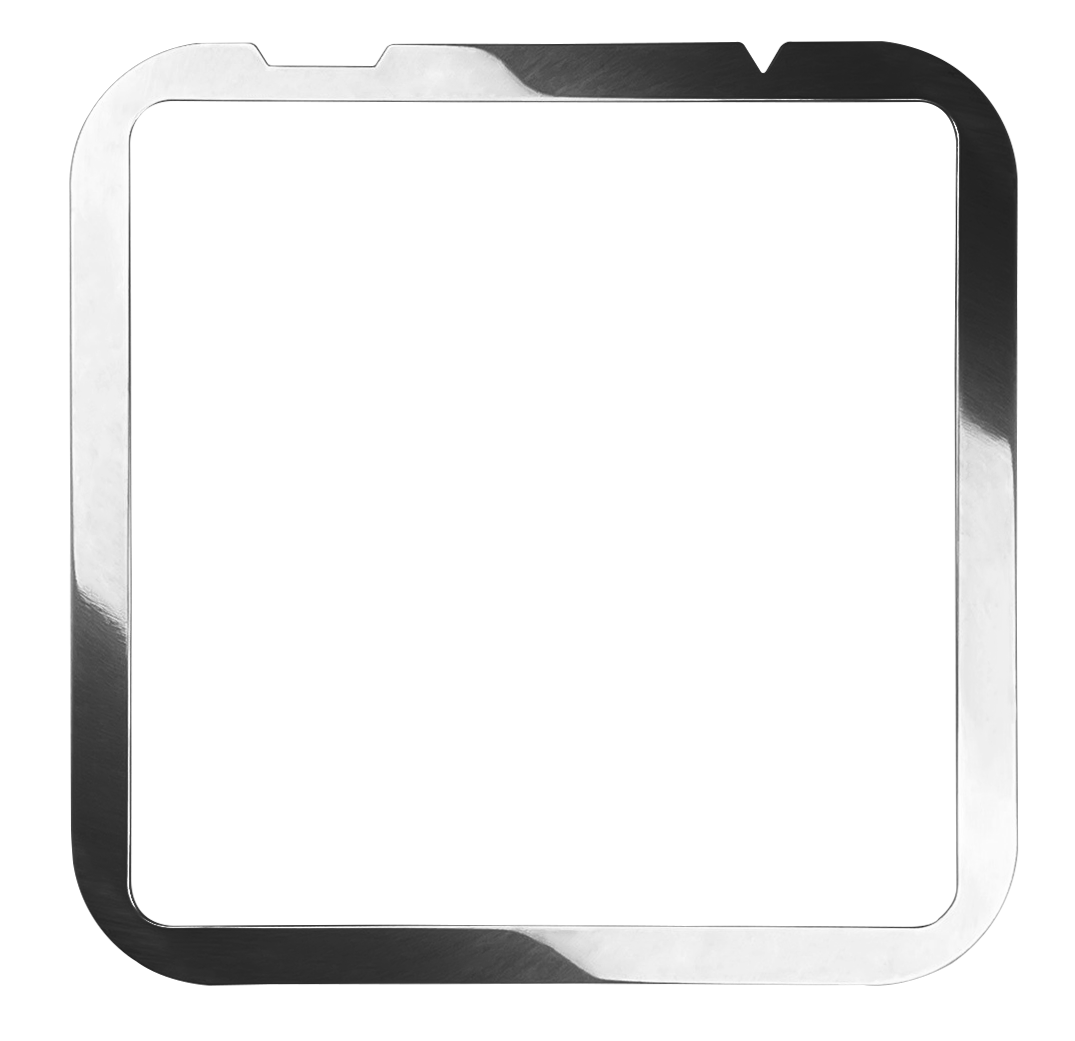
A dicing ring supports the dicing tape and helps keep the wafer stable during mounting, cutting, handling, storage, inspection, and die pick-up preparation.
Material selection should consider rigidity, flatness, edge finish, cleanability, and dimensional stability after repeated use.
1. Rigidity and Tape Support
The ring must support the dicing tape evenly. If the material is not rigid enough, tape support may become unstable, making wafer handling less consistent.
For thin wafers, large wafer formats, or high-value dies, stronger rigidity helps reduce process risk.
2. Dimensional Stability and Equipment Fit
A dicing ring must fit smoothly with dicing equipment, wafer frame cassettes, storage boxes, and handling tools.
If dimensions change after repeated use, loading and unloading may become less consistent. Stainless steel is often selected because it maintains stable dimensions across repeated handling, cleaning, and storage cycles.
3. Cleanability and Reuse
Reusable dicing rings must support proper cleaning. After wafer dicing, adhesive residue, particles, stains, or handling marks may remain on the ring.
The material should be cleaned without affecting flatness, surface condition, or dimensional accuracy. This is one reason stainless steel dicing rings are widely used in semiconductor back-end manufacturing.
Stainless Steel Dicing Rings
A stainless steel dicing ring is widely used for precision wafer dicing because it provides strong support, stable dimensions, good durability, and reliable reuse performance.
Key Advantages of Stainless Steel Dicing Rings
| Advantage | Benefit |
|---|---|
| High rigidity | Stable tape support |
| Dimensional stability | Better equipment and cassette fit |
| Good flatness control | More consistent wafer mounting |
| Reusable structure | Lower long-term replacement cost |
| Cleanable surface | Supports cleaning and refurbishment |
| Laser engraving compatibility | Supports traceability |
For manufacturers that need process consistency, stainless steel usually provides stronger long-term value than materials that deform easily or have shorter reuse life.
When Stainless Steel Is the Better Choice
Stainless steel dicing rings are recommended for:
- Reusable wafer dicing rings
- Thin wafer handling
- Large wafer formats
- High-volume production
- Strict equipment compatibility
- Traceability management
- Cleaning and refurbishment
If the wafer, die, or process value is high, stainless steel is usually the safer material choice.
Common Stainless Steel Dicing Ring Specifications
When selecting a stainless steel dicing ring, buyers should review:
- Outer diameter
- Inner diameter
- Thickness
- Flatness
- Surface finish
- Edge finishing
- Engraving area
These details help the ring work smoothly with dicing tape, equipment, cassettes, storage boxes, and cleaning processes.
Plastic Dicing Rings
A plastic dicing ring may be used when light weight, lower initial cost, or specific handling conditions are more important than long-term reuse.
Plastic rings are lighter than stainless steel rings, but their performance depends on material, design, thickness, manufacturing quality, and use environment.
Advantages of Plastic Dicing Rings
- Lightweight
- Lower initial cost
- Reduced metal contact
- Flexible design possibilities
- Suitable for some limited-use applications
Limitations of Plastic Dicing Rings
Compared with stainless steel, plastic may have lower rigidity, weaker dimensional stability, and shorter service life.
Possible concerns include deformation, surface wear, cleaning limitations, and tolerance variation. Plastic is not always unsuitable, but it should be tested against actual process requirements before production use.
Stainless Steel vs Plastic Dicing Rings
| Comparison Item | Stainless Steel Dicing Ring | Plastic Dicing Ring |
|---|---|---|
| Rigidity | High | Lower, depending on material |
| Dimensional stability | Strong | Material-dependent |
| Reusability | High | Limited or application-dependent |
| Cleaning support | Good | Depends on plastic type |
| Weight | Heavier | Lighter |
| Initial cost | Higher | Often lower |
| Long-term cost | Can be lower with reuse | May increase with replacement |
| Best use case | Precision, reusable production | Lightweight or limited-use handling |
For many semiconductor manufacturers, stainless steel is the safer choice when stability, reuse, and process consistency are priorities.

How to Select Dicing Ring Material by Application
1. For Reusable Production Lines
For production lines that reuse dicing rings, stainless steel is usually the stronger option. It supports repeated cleaning, inspection, and handling while maintaining better dimensional stability.
2. For Thin Wafer or High-Value Die Applications
Thin wafers and high-value dies require stable support. In these applications, rigidity and flatness are especially important. Stainless steel provides stronger structural support and helps the dicing tape remain stable.
3. For Cost-Sensitive or Lightweight Handling
Plastic dicing rings may be considered when lightweight handling or lower initial cost is the main priority. Buyers should still confirm tolerance, cleanliness, and tape support requirements.
4. For Custom Equipment or Non-Standard Processes
Some production lines use special equipment, cassette designs, storage boxes, or process layouts. A custom dicing ring can be designed with specific OD, ID, thickness, surface finish, edge treatment, and engraving requirements.
Custom Dicing Ring Options
A custom dicing ring helps match the ring to the wafer, dicing tape, cassette, frame box, storage system, or handling tool.
Common custom options include:
- Custom outer diameter and inner diameter
- Custom thickness
- Flatness control
- Polished or matte surface finish
- Edge finishing
- Laser engraving
- Cleaning and refurbishment support
- Special geometry for equipment compatibility
Surface Finish: Polished or Matte
Surface finish affects cleanliness, handling, inspection, and reuse.
| Surface Finish | Typical Benefit |
|---|---|
| Polished finish | Smooth surface, clean appearance, easier inspection |
| Matte finish | Lower glare, practical handling surface |
The best finish depends on handling method, cleaning process, inspection requirements, and production environment.
Laser Engraving and Traceability
Stainless steel dicing rings can be laser engraved with product numbers, serial numbers, batch codes, logos, manufacturing dates, or internal tracking codes.
This helps customers manage reusable rings, especially when multiple sizes or batches are used.
Thickness and Flatness Are Also Important
Material selection is important, but material alone is not enough. Incorrect thickness or poor flatness may still cause handling problems.
Buyers should confirm:
- Ring thickness
- Flatness
- OD and ID tolerance
- Edge condition
- Surface roughness
- Engraving position
A reliable supplier should be able to discuss these details clearly, not only provide a material name.
Cleaning and Reuse Considerations
One major reason manufacturers choose stainless steel dicing rings is reuse. A reusable ring can help reduce waste and control long-term cost.
Before choosing a reusable dicing ring, buyers should confirm:
| Reuse Factor | What to Check |
|---|---|
| Cleaning method | Whether the material supports precision cleaning |
| Surface condition | Whether residue, stains, or scratches can be controlled |
| Flatness after reuse | Whether the ring remains stable after repeated cycles |
| Marking durability | Whether engraving remains readable after cleaning |
| Inspection process | Whether the ring is checked before reuse |
Stainless steel dicing rings are often preferred because they support cleaning, inspection, and reuse more reliably than many plastic alternatives.
Buyer Checklist Before Ordering Dicing Rings
Before ordering dicing rings, prepare the following information:
- Wafer size
- Dicing tape type
- Blade dicing or laser dicing process
- Required OD and ID
- Required thickness
- Flatness requirement
- Surface finish preference
- Equipment compatibility
- Cassette or frame box compatibility
- Cleaning and reuse expectations
- Laser engraving needs
- Quantity and replacement cycle
This helps prevent poor fit, unstable tape support, unnecessary replacement cost, or process delays.
YJ Corevia Dicing Ring Material Solutions
YJ Corevia provides stainless steel dicing rings, wafer frames, and custom frame solutions for semiconductor back-end manufacturing.
With long-term stainless steel fabrication experience and semiconductor handling product knowledge, YJ Corevia supports customers who need stable, reusable, and process-compatible dicing ring solutions.
Available Dicing Ring and Wafer Handling Support
| Solution | Description |
|---|---|
| Stainless steel dicing rings | Rigid and reusable rings for stable wafer dicing support |
| Standard sizes | 6-inch, 8-inch, and 12-inch options |
| Custom dimensions | OD, ID, thickness, and special geometry |
| Surface finish options | Polished or matte finish |
| Laser engraving | Logo, product number, serial number, batch code, or date marking |
| Cleaning support | Dicing ring cleaning and refurbishment options |
| Related handling products | Wafer frame boxes, cassettes, shippers, and storage solutions |
YJ Corevia can help customers evaluate the right dicing ring material and specification based on real production conditions.
Conclusion
Dicing ring material selection should be based on process stability, not only material cost.
Stainless steel dicing rings are suitable for manufacturers that need rigidity, dimensional stability, cleanability, reuse, and custom machining. Plastic dicing rings may be used for selected lightweight or limited-use applications, but they should be evaluated carefully before precision wafer dicing use.
For manufacturers that need stable, reusable, and customizable dicing ring solutions, YJ Corevia provides stainless steel dicing rings, standard sizes, custom dimensions, surface finish options, laser engraving, and cleaning support.
Contact us to discuss your dicing ring material, size, thickness, surface finish, and custom wafer handling requirements.
FAQ: Dicing Ring Material
1. What is the best material for a dicing ring?
Stainless steel is often preferred for precision wafer dicing because it provides high rigidity, stable dimensions, good reuse performance, and cleaning compatibility.
2. Is stainless steel better than plastic for dicing rings?
For precision wafer dicing, stainless steel is often better than plastic because it provides higher rigidity, stronger dimensional stability, better reuse performance, and better cleaning compatibility.
3. Are plastic dicing rings suitable for semiconductor production?
Plastic dicing rings may be suitable for lightweight or limited-use applications. However, buyers should check rigidity, deformation risk, cleaning compatibility, and dimensional stability.
4. Can dicing rings be customized?
Yes. Dicing rings can be customized by outer diameter, inner diameter, thickness, surface finish, flatness requirement, edge finishing, laser engraving, and special geometry.
5. What specifications should I provide for a custom dicing ring?
Buyers should provide wafer size, OD, ID, thickness, flatness requirement, surface finish, edge finishing, engraving needs, equipment compatibility, and cleaning or reuse expectations.
6. Does YJ Corevia provide custom dicing rings?
Yes. YJ Corevia provides stainless steel dicing rings, standard wafer ring sizes, custom dimensions, surface finish options, laser engraving, and cleaning support.